
So, I realize I'm a bit late to be getting on the Avatar train, and as such, probably someone else has addressed this and potentially done a far better job than I will. Still, Story is kind of my life; and though I've been immersed in a great number of stories over the last two months, I feel that Avatar provides a unique opportunity to engage in some story analyzation. Which, if you know me, is one of my most favorite activities in the world.
I went to see Avatar yesterday with my parents, who came into to Austin from San Antonio to hang with me, since all three of us are STILL looking for jobs in Texas. (Curse you, economy!!)
Anyway, we debated on a few options, but went with Avatar, and I have to say, I really didn't know what I was in for. I knew that there were blue people, and the premise of humans using Avatars to communicate with the Na'vi. (Btw, let me insert this sidebar here, before I get too immersed: Navi is actually the Hebrew word for prophet [and one of about ten words I remember from my semester of intro to Biblical Hebrew courtesy of Dr. Bolger.]) But I wasn't quite prepared to have it invoke such strong reactions in me, even knowing that I tend to be a little more sensitive to stories than some people.
Afterward, I scrambled to make sense of why I got so drawn into the movie. Was it because it was visually stunning? Was it because it appealed to the greenie in me? Or was it something even a little deeper?
Eleven years ago this April, I attended a convocation at my college where the speaker used another James Cameron epic as an illustration that would change my life. He used the movie "Titanic" to explain the gospel, and the Gospel to make sense of the success of "Titanic." I had never heard anyone do anything like that before, and it shaped the way I forever looked at stories. Now I'm going to do the same thing for Avatar. (**Incidentally, if you haven't seen the movie and don't want the story spoiled, you should probably stop reading right here.**)
According to that speaker (John Eldredge), the gospel can be broken down as a four act play. I've heard of others using five and six acts, but I'm going to stick to JE's four for now:
Act One, Eternal love. Act Two, The Entrance of Evil. Act Three, The Battle for the Heart. Act Four, The Kingdom Restored.
Act One isn't just about Eden. It's about a world that was created out of the love and community of the Trinity. So for Avatar, it's not just about how Pandora echoes Eden. It's about the Na'vi and their connectedness. I don't want to overchiristianize a story that was probably never intended to be understood as a Christian story. But I think here are spiritual truths to be gleaned, as well as some amazing spiritual imagery.
On Pandora, the Na'vi care about each other, they care about the other creatures, and they care for their world. There's something about the way they live which hearkens back to the charge given Adam and Eve in the Garden.
Act Two was what really got me agitated. There's always a villain in our epic stories, because there's a villain woven into our own Story as well. Just as Satan tempted Eve and brought about the destruction of paradise, Pandora has it's villains also. And oh, how I hated them. Parker Selfridge was the calculating company man after the bottom line, and Colonel Miles Quaritch was the militant head of security bent on crushing any opposition. They both profess to be willing to try diplomacy first, but their tactics and habit of depersonalizing the Na'vi as "savages" and "blue monkeys" illustraated their true motives.
I really, truly hated Quartich in a way I've not hated a villain in a long time. Often bad guys are complex, manipulative, selfish, and even crazy; Quartich was simply evil. He was single-minded in his purpose and committed to his worldview that taking the mineral "unobtanium" was his job, his right, and took delight in destrying anything that got in his way. As such, he embodied a description of our Enemy as given to us by Jesus: "The thief comes only to steal, kill, and destroy." Yep, those were pretty much Quartich's objectives, and he enjoyed it.
Act Three is the battle. It's also the part of the story we're all in right now in our larger Story. In Avatar, it took Jake Sully sacrificing his place with the humans to rally the Na'vi. It was a people united to fight together. The battle was fierce and brutal. And perhaps you noticed as I did that like many epics, there was a tipping point. There's always a moment where everything looks lost for the good guys--heroes are dying or on the brink, and it looks like good will be defeated. It is only then, when everything is darkest, does the tide turn.
Act Four is the Kingdom Restored. In other words, the good guys win. Things go back to being good again. This is really a crucial point of any epic. Perhaps not all heroes live to see the kingdom restored. But their deaths were not in vain; much good comes of the battles they fought and the lives they gave. In Avatar, the mercenaries are sent packing and Pandora once again belongs to the Na'vi. And Jake, the hero, dies in his human form and is reborn as one of them.
I feel like I could draw so many more spiritual parallels from Avatar than environmental ones. I mean, yes, the message could be boiled down to "you can't take whatever you want, just because you want it," which is something every two year old ought to be taught. Though the religion of Pandora was denounced by the Vatican recently and certainly isn't Christianity, there were some interesting symbols. There was the Tree of Souls, of course--a holy tree to that people; and the way Jake's avatar was covered in the "seeds of Eywa" was akin to a baptism.
Let me end by saying this: "Avatar" is by no means a Christian film. That said, if you or someone you know enjoyed it, you can certainly draw spiritual parallels and truths from it. As Arthur holms said, "All truth is God's truth." If you have friends who need to hear (or be reminded of) the gospel and who like Avatar, don't be afraid to use the story to point to Christ, and our place in the larger Epic we're all in.

"Once upon a blog...."
Showing posts with label John Eldredge. Show all posts
Showing posts with label John Eldredge. Show all posts


4.19.2009
Dealing with Doubt
Have you ever had one of those moments when you said you'd do something you were invited to, and later, you regretted accepting? Like, early in the morning, when you could be sleeping? But then you got up anyway, and even through your sleepiness, you realized there was a Reason you were supposed to go to that thing?
That happened to me today.
I went to church with my parents--ironically, not by their invitation, but a friend who really only asked casually, "Will you be going?" For some reason, I said yes.
They had a guest speaker this morning, and it was when he got up to preach that I realized Why I Was There.
We had Easter (we call it "Resurrection") Sunday last week. I went to my parent's church then, also, but I was really cranky and in a bad mood that morning. But I remember standing there last week, reading the apostle's creed in unison with everyone, and thinking, "Do I really believe this?"
Because from the outside, it sounds kind of absurd. Truth be told, I've never really been on the outside of it. It's been a part of my life for as long as I can remember. So I took a step back last Sunday, and asked myself, "Do I believe this?"
And the answer was Yes.
Yes, I believe it all. God, Jesus, the cross, the resurrection , the Holy Spirit, Heaven, all of it. It's too integral for me to think of it as untrue. It's my Life.
But lately...well, quite frankly, I've been better. If you're one of those few souls who regularly read this blog, maybe you've noticed it. I try to be optimistic (but honest) in my posts, but lately, I've really been wrestling. And I'd be lying if I said I haven't been struggling somewhat with my faith. The thing is, though, I don't doubt whether God exists. I don't doubt that Jesus came, died, and rose again.
When I doubt, it's a nagging frustration--a feeling that somehow, God is holding out on me. I doubt his heart. I doubt His goodness, that He cares about me.
When I say it like that, it almost sounds worse than doubting His existence. Because haven't I seen His work in my life time & time again? Hasn't He provided for me? Led me, taught me, comforted me? I'm as bad as the Israelites of the Old Testament, forgetting the great rescues & victories God provided, and turning to idols to meet their needs.
So, this morning: the speaker, a professor at Geneva, starts speaking about Thomas the disciple and his doubt. Something clicks, and I know I need to pay attention. I know this is why I've forsaken my bed and shown up. Doubt is something we all face, to varying degrees. We give Thomas a bad rap, because he didn't take the rest of the disciples' word for it that Jesus was alive. But didn't they all wrestle with doubt those first couple days? Resurrection seemed impossible, despite all the miracles they'd seen. He'd given them every reason to expect it--even raised people from the dead right in front of them. They still couldn't see it.
I'm no different. I've been blinded by my own circumstances once again. And, I've grown cynical and somewhat bitter lately.
In an effort to combat the hardening of my heart, I've turned once again to the writings of John Eldredge, which have steadied and softened my heart many, many times over the past decade. I picked up "Desire" (formerly titled "The Journey of Desire") and have been rereading it the past week. And once again, he's nailed me. Out of my frustration, I have been trying to bury my desires and kill my heart, because I just can't stand to be disappointed any more. But that doesn't work. Desire won't be denied; and it begins to crop up in other areas if we don't learn how to live with it. And we must, because God made us to desire--but He also made us so that our desires are only ultimately fulfilled in Him.
Life, Eldredge says, is both a Battle and a Journey.
I've been feeling the battle part lately. But instead of fighting back, I've been hunkered down in a foxhole, trying to ignore the fire raining down all around me.
I don't have it figured out yet. I'm not suddenly "all better." In fact, if anything, I've been more aware of own humble state lately. I've been a Christian for so long that extraordinary things seem ordinary to me. My senses are becoming dull. My heart's grown hard. I've been looking to other things to fill me. But no more. Without wanting to sound ultra-Christiany about it (as if an ultra-Christian would admit to doubting like this anyway!), I need to turn back to God. That sounds so religious, it almost puts me off. But...I can't delay this any longer.
So, I'm on a journey now--to get my heart back. Here I go.
That happened to me today.
I went to church with my parents--ironically, not by their invitation, but a friend who really only asked casually, "Will you be going?" For some reason, I said yes.
They had a guest speaker this morning, and it was when he got up to preach that I realized Why I Was There.
We had Easter (we call it "Resurrection") Sunday last week. I went to my parent's church then, also, but I was really cranky and in a bad mood that morning. But I remember standing there last week, reading the apostle's creed in unison with everyone, and thinking, "Do I really believe this?"
Because from the outside, it sounds kind of absurd. Truth be told, I've never really been on the outside of it. It's been a part of my life for as long as I can remember. So I took a step back last Sunday, and asked myself, "Do I believe this?"
And the answer was Yes.
Yes, I believe it all. God, Jesus, the cross, the resurrection , the Holy Spirit, Heaven, all of it. It's too integral for me to think of it as untrue. It's my Life.
But lately...well, quite frankly, I've been better. If you're one of those few souls who regularly read this blog, maybe you've noticed it. I try to be optimistic (but honest) in my posts, but lately, I've really been wrestling. And I'd be lying if I said I haven't been struggling somewhat with my faith. The thing is, though, I don't doubt whether God exists. I don't doubt that Jesus came, died, and rose again.
When I doubt, it's a nagging frustration--a feeling that somehow, God is holding out on me. I doubt his heart. I doubt His goodness, that He cares about me.
When I say it like that, it almost sounds worse than doubting His existence. Because haven't I seen His work in my life time & time again? Hasn't He provided for me? Led me, taught me, comforted me? I'm as bad as the Israelites of the Old Testament, forgetting the great rescues & victories God provided, and turning to idols to meet their needs.
So, this morning: the speaker, a professor at Geneva, starts speaking about Thomas the disciple and his doubt. Something clicks, and I know I need to pay attention. I know this is why I've forsaken my bed and shown up. Doubt is something we all face, to varying degrees. We give Thomas a bad rap, because he didn't take the rest of the disciples' word for it that Jesus was alive. But didn't they all wrestle with doubt those first couple days? Resurrection seemed impossible, despite all the miracles they'd seen. He'd given them every reason to expect it--even raised people from the dead right in front of them. They still couldn't see it.
I'm no different. I've been blinded by my own circumstances once again. And, I've grown cynical and somewhat bitter lately.
In an effort to combat the hardening of my heart, I've turned once again to the writings of John Eldredge, which have steadied and softened my heart many, many times over the past decade. I picked up "Desire" (formerly titled "The Journey of Desire") and have been rereading it the past week. And once again, he's nailed me. Out of my frustration, I have been trying to bury my desires and kill my heart, because I just can't stand to be disappointed any more. But that doesn't work. Desire won't be denied; and it begins to crop up in other areas if we don't learn how to live with it. And we must, because God made us to desire--but He also made us so that our desires are only ultimately fulfilled in Him.
Life, Eldredge says, is both a Battle and a Journey.
I've been feeling the battle part lately. But instead of fighting back, I've been hunkered down in a foxhole, trying to ignore the fire raining down all around me.
I don't have it figured out yet. I'm not suddenly "all better." In fact, if anything, I've been more aware of own humble state lately. I've been a Christian for so long that extraordinary things seem ordinary to me. My senses are becoming dull. My heart's grown hard. I've been looking to other things to fill me. But no more. Without wanting to sound ultra-Christiany about it (as if an ultra-Christian would admit to doubting like this anyway!), I need to turn back to God. That sounds so religious, it almost puts me off. But...I can't delay this any longer.
So, I'm on a journey now--to get my heart back. Here I go.
2.18.2009
I Yield
So, if you know me, if you've spent any time at all with me or talking to me in the last three months or so, you know that I've been stressed. About a lot of things. My future, my purpose; I'm looking for a new job; my finances...all these things keep piling up in my head. All I've been able to see on the horizon is a giant question mark, and it's been driving me crazy.
So, I do what most people do. I make lists. I try to plan out a strategy. I ask people's advice. I do internet searches. I fill out applications; I try not to spend money on frivolous things. Oh, and I pray.
I've been keeping a journal since the beginning of the year (well, longer than that, but this one with renewed consistency). And so many entries revolve around the question of where my life is going. I keep crying out to God: Show me! Tell me! Speak to me! Reveal Your plan!
I don't have any answers. It's not that God has been silent. I've heard His voice on other, smaller matters. ie, Should I go to Branson? Yes.
And then, I've heard him speak to me in another way. Through the wisdom and insight of others. There's been a theme in my life lately. An idea, that God has been shaping. I talked in my last post about hearing God's song and being in tune with Him--but that presupposes that I AM listening.
Last weekend was Jubilee, a conference hosted by CCO, an organization my dad and friend Wendy work for. I went a few years back and blogged about it. This year I went again--but just to the (free) Sunday session. And perhaps because it was Sunday, the theme of the day seemed to be about Sabbath. Lauren Winner returned to Jubilee (the last time she spoke here was when I was there before and kind of made an idiot of myself to her!) and talked about the Jewish rhythms and purposes of keeping the Sabbath.
And it occurred to me that not only do I not keep a Sabbath day, the time I use to "relax" isn't really a kind of Sabbath rest, either. Because when I get home, I like to chill. You know? Grab some dinner, watch TV, mess around online. And I'm not saying all of those activities are always purposeless. But though I have spent days (even recent days, due to being sick) doing relatively little, I still don't know what it is like to take a Sabbath. To set aside a day in which I do not work, or create anything, and I do not fill the the silence.
Yesterday I was listening to a couple of Ransomed Heart podcasts, and John Eldredge was (appropriately!) talking about hearing God. And he stressed the idea that if you are caught up in the urgency of the moment, of needing an immediate answer from God, then you will most likely not be able to hear Him. I think you can see where I'm going with this. So Eldredge says the attitude needs to be one of openness, humility. Yielding.
Which is kind of the opposite of what I've been doing.
I mean, I try to have the posture of one who understands how dependent she is on God for all the good things in her life. But somehow, urgency begins to crowd all of that out. Daily--sometimes hourly--I have to readjust my attitude. Lately, I've found Jon Foreman's song "Your Love is Strong" to be helpful. Because panic sets in all too quickly, till all I can see and hear is chaos and confusion. And then JF sings,
Actually, I've been listening to all four of Jon Foreman's Eps a lot lately, and found them to be very healing. If you don't know, he's the lead singer of Switchfoot (currently my favorite band) and he put out four short cds, one for each season: Fall, Winter, Spring and Summer. (He also collaborated on a project called Fiction Family with Nickel Creek's Sean Watkins, and I've been digging that cd, too. Wendy & E & I saw them in concert at Grove City College a couple weeks back, but that's another story.) He's just incredibly honest and yet hopeful at the same time, and the songs have been speaking to me.
Well, God has. If I just take the time to listen. If I quiet my heart and the desperate questions clamoring to be answered.
If I yield.
So, I do what most people do. I make lists. I try to plan out a strategy. I ask people's advice. I do internet searches. I fill out applications; I try not to spend money on frivolous things. Oh, and I pray.
I've been keeping a journal since the beginning of the year (well, longer than that, but this one with renewed consistency). And so many entries revolve around the question of where my life is going. I keep crying out to God: Show me! Tell me! Speak to me! Reveal Your plan!
I don't have any answers. It's not that God has been silent. I've heard His voice on other, smaller matters. ie, Should I go to Branson? Yes.
And then, I've heard him speak to me in another way. Through the wisdom and insight of others. There's been a theme in my life lately. An idea, that God has been shaping. I talked in my last post about hearing God's song and being in tune with Him--but that presupposes that I AM listening.
Last weekend was Jubilee, a conference hosted by CCO, an organization my dad and friend Wendy work for. I went a few years back and blogged about it. This year I went again--but just to the (free) Sunday session. And perhaps because it was Sunday, the theme of the day seemed to be about Sabbath. Lauren Winner returned to Jubilee (the last time she spoke here was when I was there before and kind of made an idiot of myself to her!) and talked about the Jewish rhythms and purposes of keeping the Sabbath.
And it occurred to me that not only do I not keep a Sabbath day, the time I use to "relax" isn't really a kind of Sabbath rest, either. Because when I get home, I like to chill. You know? Grab some dinner, watch TV, mess around online. And I'm not saying all of those activities are always purposeless. But though I have spent days (even recent days, due to being sick) doing relatively little, I still don't know what it is like to take a Sabbath. To set aside a day in which I do not work, or create anything, and I do not fill the the silence.
Yesterday I was listening to a couple of Ransomed Heart podcasts, and John Eldredge was (appropriately!) talking about hearing God. And he stressed the idea that if you are caught up in the urgency of the moment, of needing an immediate answer from God, then you will most likely not be able to hear Him. I think you can see where I'm going with this. So Eldredge says the attitude needs to be one of openness, humility. Yielding.
Which is kind of the opposite of what I've been doing.
I mean, I try to have the posture of one who understands how dependent she is on God for all the good things in her life. But somehow, urgency begins to crowd all of that out. Daily--sometimes hourly--I have to readjust my attitude. Lately, I've found Jon Foreman's song "Your Love is Strong" to be helpful. Because panic sets in all too quickly, till all I can see and hear is chaos and confusion. And then JF sings,
"So why should I worry?
Why do I freak out?
God knows what I need,
You know what I need.
Your love is,
Your love is,
Your love is, Strong."
Actually, I've been listening to all four of Jon Foreman's Eps a lot lately, and found them to be very healing. If you don't know, he's the lead singer of Switchfoot (currently my favorite band) and he put out four short cds, one for each season: Fall, Winter, Spring and Summer. (He also collaborated on a project called Fiction Family with Nickel Creek's Sean Watkins, and I've been digging that cd, too. Wendy & E & I saw them in concert at Grove City College a couple weeks back, but that's another story.) He's just incredibly honest and yet hopeful at the same time, and the songs have been speaking to me.
Well, God has. If I just take the time to listen. If I quiet my heart and the desperate questions clamoring to be answered.
If I yield.
8.23.2007
On the Other Hand...
Maybe I'm wrong.
If I let my cynicism take over, there are days like today. When I think, who need this?
Maybe I'm stupid. Maybe Love Stinks.
Seriously, what am I doing, here? What am I waiting for?
Sometimes, it's really easy to get frustrated. I look at my life, and I don't see the things happening that I want to be happening. And yes, I know it's all in God's timing.
But some days I want to give it all up, lock my heart away. It's frustrating to care about someone who does not feel the same way. And it doesn't get easier. This just doesn't seem to be something I can fix or make better on my own. I don't know.
I've been working on a story for a few years now, and the main character, Anna, is in love with a guy for about seven years, the duration of the book. Obviously, I'm not going to tell you what happens, but the point is, I didn't give it a second thought when I put her through that. I just assumed she could handle that kind of emotional torment and anguish. Probably because I assumed I could. And so for years, she tries to reconcile the fact that she cares deeply for a guy who for the most part is unable to love her back.
Is it just me, or is that depressing?
Anna is brave, I'll give her that. I'm not sure I would really be able to do the same in her place. I'd like to think I could...but then there are days like today. When I wonder why I would do that to myself. Wouldn't it make more sense to spare my heart, if I could?
God has given us all sorts of counsel and direction in his written Word; thank God, we have it written down in black and white. ... The more that wisdom enters our hearts, the more we will be able to trust our hearts in difficult situations. Notice that wisdom is not cramming our head with principles. It is developing a discerning heart. What made Solomon such a sharp guy was his wise and discerning heart (1 Kings 3:9).
We don’t seek wisdom because it’s a good idea; we seek wisdom because we’re dead if we don’t.
Wisdom is crucial. But wisdom is not enough. Wisdom is essential . . . and insufficient. ...
It was dangerous advice, indeed, to send the young maiden before her king unbidden, and even worse to send a boy against a trained mercenary. And frankly, it looked like perfect madness for Jesus to give himself up to the authorities, let himself get killed....The Bible is full of such counterintuitive direction from God. (John Eldredge, Waking the Dead, pp 99-100.)
I'm trying to figure out what God wants from me in this situation. It always seems like, at the end of the day, His words to me are, "Don't give up." Don't close off your heart. Don't become a cynic. Don't feel stupid for loving. Well, today, Love does feel stupid. And quite frankly, I'm not even sure if Love is the right word for anything that I"m feeling. What do I know about Love, after all? What do I know about relationships? What do I know about truly caring about someone other than myself?
Nothing. So, apparently, I've got a lot to learn.
If I let my cynicism take over, there are days like today. When I think, who need this?
Maybe I'm stupid. Maybe Love Stinks.
Seriously, what am I doing, here? What am I waiting for?
Sometimes, it's really easy to get frustrated. I look at my life, and I don't see the things happening that I want to be happening. And yes, I know it's all in God's timing.
But some days I want to give it all up, lock my heart away. It's frustrating to care about someone who does not feel the same way. And it doesn't get easier. This just doesn't seem to be something I can fix or make better on my own. I don't know.
I've been working on a story for a few years now, and the main character, Anna, is in love with a guy for about seven years, the duration of the book. Obviously, I'm not going to tell you what happens, but the point is, I didn't give it a second thought when I put her through that. I just assumed she could handle that kind of emotional torment and anguish. Probably because I assumed I could. And so for years, she tries to reconcile the fact that she cares deeply for a guy who for the most part is unable to love her back.
Is it just me, or is that depressing?
Anna is brave, I'll give her that. I'm not sure I would really be able to do the same in her place. I'd like to think I could...but then there are days like today. When I wonder why I would do that to myself. Wouldn't it make more sense to spare my heart, if I could?
God has given us all sorts of counsel and direction in his written Word; thank God, we have it written down in black and white. ... The more that wisdom enters our hearts, the more we will be able to trust our hearts in difficult situations. Notice that wisdom is not cramming our head with principles. It is developing a discerning heart. What made Solomon such a sharp guy was his wise and discerning heart (1 Kings 3:9).
We don’t seek wisdom because it’s a good idea; we seek wisdom because we’re dead if we don’t.
Wisdom is crucial. But wisdom is not enough. Wisdom is essential . . . and insufficient. ...
It was dangerous advice, indeed, to send the young maiden before her king unbidden, and even worse to send a boy against a trained mercenary. And frankly, it looked like perfect madness for Jesus to give himself up to the authorities, let himself get killed....The Bible is full of such counterintuitive direction from God. (John Eldredge, Waking the Dead, pp 99-100.)
I'm trying to figure out what God wants from me in this situation. It always seems like, at the end of the day, His words to me are, "Don't give up." Don't close off your heart. Don't become a cynic. Don't feel stupid for loving. Well, today, Love does feel stupid. And quite frankly, I'm not even sure if Love is the right word for anything that I"m feeling. What do I know about Love, after all? What do I know about relationships? What do I know about truly caring about someone other than myself?
Nothing. So, apparently, I've got a lot to learn.
12.07.2005
Narnia Mania
I want to tell you a story.
When I was about three years old, my father started reading “The Chronicles of Narnia” to me. I am not kidding. He adapted it to my level, of course, so that my young mind could grasp the unfolding drama. The best part was that he used voices. He even used British accents. It was great. To this day I can still hear echoes when I re-read them.
I don’t remember the very first time I heard it, but I do remember becoming absolutely captivated at a very young age. At five, I was already imitating Lucy, my favorite character (besides Aslan)—I dressed up as her for (my last) Halloween that year. There was something about the stories that absolutely enchanted me.
 Ever since then, I’ve been looking for a way into Narnia.
Seriously, I could write pages and pages on how much C. S. Lewis’ stories influenced me. Actually, I did write pages—in college I wrote a paper on it.
His depiction of Jesus as a Lion—wow. Brilliance. More than that, it was inspired. Aslan is both ferocious and tender, depending on the situation. He knows when to whisper and when to roar, when to use his claws and when to velvet them. There was something about this duality, this supreme wisdom that sunk deep into my psyche. Aslan’s supreme justice and supreme mercy combined to create a God that is seldom preached from our pulpits.
I was also deeply impressed by the intimate friendship Lucy and Aslan had. Lewis would often write that Lucy “understood his moods” or correctly interpreted his growls. She seemed somehow to be most in tune with him, and when she is told she is too old to come back to Narnia, she sobs that it’s Him she’ll miss, not the country. At that point in my young life I had a very similar connection to God—innocent, full of trust and love and the assurance that He cared about me.
I tell ya, Life can really take that out of you. It’s amazing to me how much that belief has been assaulted in the past decade or so of my life. That complete trust we have when we are children is attacked as we get older; it is shaken, just like our faith in everything else around us eventually is.
But no matter how old I get, I am taken back to that sense of wonder when I re-read “The Lion, the Witch, and the Wardrobe.” In the past couple of years, I have had the privilege of reading it to children. I read it to a group of (older) students at a preschool a couple of years ago, and just a few months ago to my Chinese Church kids. Yes, I use voices and fake accents. I love seeing the kids get into the story…and I love getting myself back into it. I especially want them to know the “real” story before the movie comes out in December.
I know it will be really good, very well done, probably spectacular from all that I’ve seen of it already…but nothing will ever live up to the images I have in my head. They will change things, because that’s what movie people do to books. I could write a whole other post of my disgust on that topic. And because it’s something that means so much to me, I am trying to prepare myself now for the inevitable disappointments. (Hey, I had them with LOTR, too, and those are like my favorite movies of all time.) And I am trying to overlook the hype which now surrounds the movie and stay positive, knowing that no matter what happens with the movie, there will always be the original story.
The point is, I probably am who I am today in a large part because twenty-three years ago my dad read me a thirty year old book written by deceased English author. I would not be J. M. Richards, I would not have written “Found Phoebe,” if it weren’t for my dad, and Clive Staples Lewis. That sounds like a big thing to say. But I really believe it. The love of Narnia opened up for me a whole desire for more adventures into other lands—and for adventure in general, the longing to be part of something bigger. And the symbolism, which I was able to grasp even as a child, showed me that other stories might also carry a deeper meaning.
This is something which has come to fruition in me only in recent years; but I recognize when and where the seeds were planted (and subsequently watered in large part by John Eldredge). I look back in amazement that something so beautifully simple had such a profound effect on me.
Well, I told you I could write pages on this. I could mention the beautiful Chris Rice song, “Run the Earth and Watch the Sky” [thanks to Brianne for introducing me to that song] where he mentions Aslan and the Pevensies as part of his adolescence. I could go off on a tangent and talk about when I went to Chicago, to Wheaton, and saw (touched!!!) C.S. Lewis’ desk at a special library dedicated to him and six other British authors (including Tolkien and George MacDonald). But really this post is just a tribute; The Lion, the Witch, and the Wardrobe, and How it Changed My Entire Life, by J. M. Richards. Or something like that. If I sound fanatical, even evangelistic about it…well, I don’t apologize. I can only hope that someday you, too, will experience the wonder, and find your own adventurous encounter with the untamed God. Y
When I was about three years old, my father started reading “The Chronicles of Narnia” to me. I am not kidding. He adapted it to my level, of course, so that my young mind could grasp the unfolding drama. The best part was that he used voices. He even used British accents. It was great. To this day I can still hear echoes when I re-read them.
I don’t remember the very first time I heard it, but I do remember becoming absolutely captivated at a very young age. At five, I was already imitating Lucy, my favorite character (besides Aslan)—I dressed up as her for (my last) Halloween that year. There was something about the stories that absolutely enchanted me.
 Ever since then, I’ve been looking for a way into Narnia.
Seriously, I could write pages and pages on how much C. S. Lewis’ stories influenced me. Actually, I did write pages—in college I wrote a paper on it.
His depiction of Jesus as a Lion—wow. Brilliance. More than that, it was inspired. Aslan is both ferocious and tender, depending on the situation. He knows when to whisper and when to roar, when to use his claws and when to velvet them. There was something about this duality, this supreme wisdom that sunk deep into my psyche. Aslan’s supreme justice and supreme mercy combined to create a God that is seldom preached from our pulpits.
I was also deeply impressed by the intimate friendship Lucy and Aslan had. Lewis would often write that Lucy “understood his moods” or correctly interpreted his growls. She seemed somehow to be most in tune with him, and when she is told she is too old to come back to Narnia, she sobs that it’s Him she’ll miss, not the country. At that point in my young life I had a very similar connection to God—innocent, full of trust and love and the assurance that He cared about me.
I tell ya, Life can really take that out of you. It’s amazing to me how much that belief has been assaulted in the past decade or so of my life. That complete trust we have when we are children is attacked as we get older; it is shaken, just like our faith in everything else around us eventually is.
But no matter how old I get, I am taken back to that sense of wonder when I re-read “The Lion, the Witch, and the Wardrobe.” In the past couple of years, I have had the privilege of reading it to children. I read it to a group of (older) students at a preschool a couple of years ago, and just a few months ago to my Chinese Church kids. Yes, I use voices and fake accents. I love seeing the kids get into the story…and I love getting myself back into it. I especially want them to know the “real” story before the movie comes out in December.
I know it will be really good, very well done, probably spectacular from all that I’ve seen of it already…but nothing will ever live up to the images I have in my head. They will change things, because that’s what movie people do to books. I could write a whole other post of my disgust on that topic. And because it’s something that means so much to me, I am trying to prepare myself now for the inevitable disappointments. (Hey, I had them with LOTR, too, and those are like my favorite movies of all time.) And I am trying to overlook the hype which now surrounds the movie and stay positive, knowing that no matter what happens with the movie, there will always be the original story.
The point is, I probably am who I am today in a large part because twenty-three years ago my dad read me a thirty year old book written by deceased English author. I would not be J. M. Richards, I would not have written “Found Phoebe,” if it weren’t for my dad, and Clive Staples Lewis. That sounds like a big thing to say. But I really believe it. The love of Narnia opened up for me a whole desire for more adventures into other lands—and for adventure in general, the longing to be part of something bigger. And the symbolism, which I was able to grasp even as a child, showed me that other stories might also carry a deeper meaning.
This is something which has come to fruition in me only in recent years; but I recognize when and where the seeds were planted (and subsequently watered in large part by John Eldredge). I look back in amazement that something so beautifully simple had such a profound effect on me.
Well, I told you I could write pages on this. I could mention the beautiful Chris Rice song, “Run the Earth and Watch the Sky” [thanks to Brianne for introducing me to that song] where he
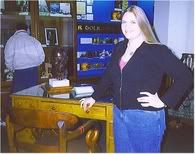 mentions Aslan and the Pevensies as part of his adolescence. I could go off on a tangent and talk about when I went to Chicago, to Wheaton, and saw (touched!!!) C.S. Lewis’ desk at a special library dedicated to him and six other British authors (including Tolkien and George MacDonald). But really this post is just a tribute; The Lion, the Witch, and the Wardrobe, and How it Changed My Entire Life, by J. M. Richards. Or something like that. If I sound fanatical, even evangelistic about it…well, I don’t apologize. I can only hope that someday you, too, will experience the wonder, and find your own adventurous encounter with the untamed God. Y
9.23.2005
LOST

LOOOSSSSTTT. You have to say it in a dragged-out half-sigh, it is that good. Lahhsst.
I’ve been threatening to write a tribute post about my favorite show, and now I’m doing it. Actually, this will probably end up being more like "LOST, Part 1".... I watched the season premiere the other night…WOW. It’s like, it went away for the summer, and I actually started to forget how completely and utterly addicting it is.
This reaction, I think, alarms some people. Even my family, who all enjoy the show as well. I admit I am perhaps more than a trifle obsessed. I look for clues and hints in everything. But as with all my real “obsessions” there is a good reason for it. I don’t like LOST just because the acting is fabulous, it’s brilliantly written, and the story keeps you desperate for more. It goes deeper than that, I assure you. But I’m warning you, if you want to know, and you continue reading, you are venturing into deep waters. Most people don’t go as deep as I do. But…it’s what I do.
Speaking of that—how I look for meaning in things—I got into an argument with this guy on my art site about this very topic. He was going off about how art doesn’t have meaning, it’s just a display of talent and beauty and stuff like that. He was so arrogant that it really peeved me off. I don’t care if you don’t agree with me, but he had that “well I’m right” attitude. Well, no, he wasn’t. Art in all forms can have meaning. Key word: can. Does all art have a deeper meaning? No, probably not. But sometimes that’s in the eye of the beholder. He even went as far as to say that he just dislikes people who look for deeper meanings. This shouldn’t bug me, because I really couldn't care less whether he like me or not. But on some level, it does irritate me. I’ve just come to realize in the past couple of years that “looking for the deeper meaning” is something I do. Of course that’s going to come under attack, because the deeper meaning I find usually points to God. That’s why I do it. I don’t try to make things fit a theology; I find parallels and illustrations of how life is for us—not unlike how Jesus used parables to teach his followers.
In LOST, it’s been a little harder to find clear cut parallels. In one sense, it’s obvious. We are survivors of a devastating wreck (the Fall) and we are in a hostile and mysterious place that is out of our control. But it’s a little hard to go too far with this line of thinking because we (the viewers) don’t know everything that’s going on yet.

One of my favorite episodes, “White Rabbit,” is about Jack, the reluctant doctor hero and unofficial leader on the island. He has issues with his dad, and in this episode we get flashbacks that show us a little bit of why. The whole plot sounded to me like it had been ripped from the pages of John Eldredge’s “Wild at Heart.” Young Jack receives his “father wound” after getting beat up trying to help a friend and his father says “You don’t have what it takes.” Years later, after the crash, everyone is looking to him for direction and guidance and he shrinks back. Why? “I don’t have what it takes,” he tells another castaway, Locke. Locke tells him to finish his journey, his search, because “A leader can’t lead until he knows where he’s going.”
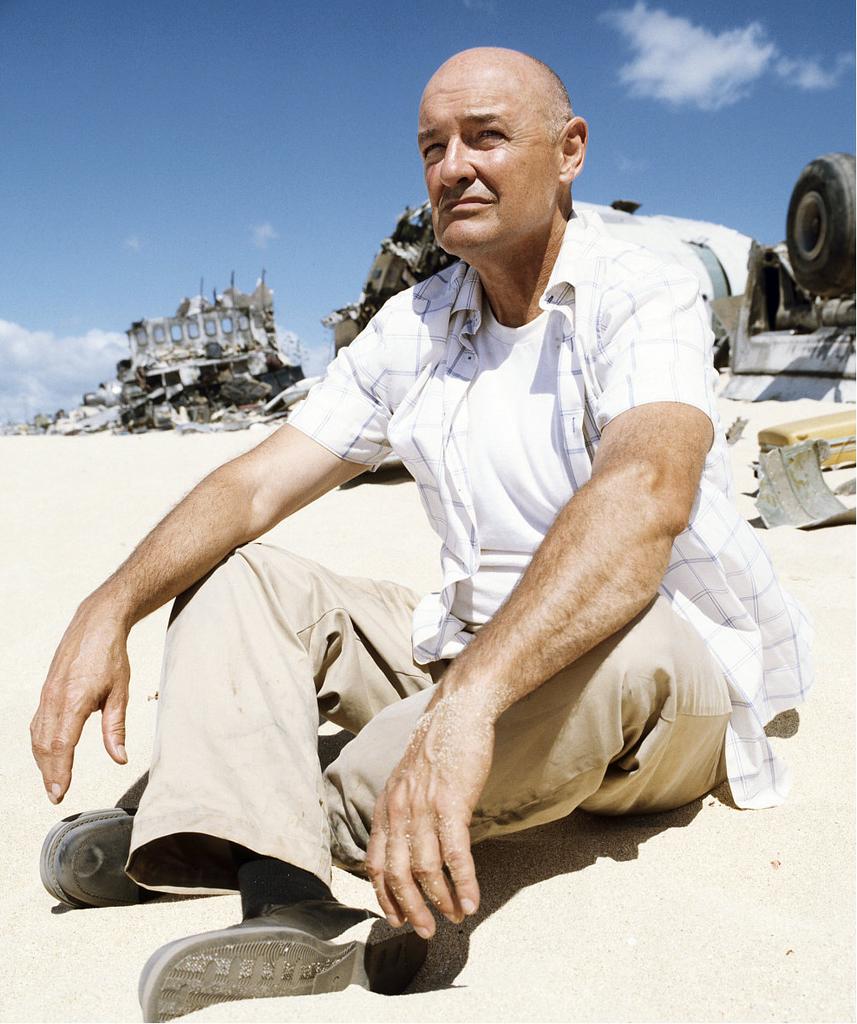 With the character of John Locke, there is the potential for a lot of parallels, but I’m just not sure what they’re going to do with him yet. Most people find him creepy, though he is oddly enough my favorite character. He begins a sort of island-worship, treating the place as though it has the power to give and take away. He would know: it gave him back the use of his legs after being in a wheelchair for four years. But whether or not his “island-worship” is a good or bad thing (much debated by fans), everyone on the island is worshipping or trusting something. Jack, the afore-mentioned hero, worships science and logic—a very culturally approved religion, especially for doctors. Most of the other characters rely on themselves so much it could be a form of religion. Others rely on another person so wholly that it ought to be considered worship. This is not so different from us: we all have things we turn to instead of God to see us through—including ourselves and those we love.
Then there is the whole theme of redemption. Essentially everyone is given a clean slate. They all have trouble making use of it and all fall back into old patterns. Kate keeps lying, trying to hide her past, Sawyer keeps conning, Shannon keeps on manipulating the men around her, Hurley begins to sound like an acquaintance from his stay at a mental institution, Charlie looks like he might go back to drugs, even Locke has strong traces of his temper underneath his new shaman-like persona. This is so like us. We have been forgiven and don’t have to be who we were, yet so quickly we go back to the things we used to do. We watch and we say “Why?” just like we do when reading through the history of Israel in the Old Testament, because we don’t realize it is also our story.
There is also a sense of destiny, of purpose to who survived the crash. Locke says plainly that he believes this, and again attributes it to the Island. But beyond that, we have seen glimpses of how each of the character’s lives and back stories connect and cross over. They are interwoven, without them even knowing it, like our lives are. “Oh, the depth of the riches of the wisdom and knowledge of God! How unsearchable his judgments, and his paths beyond tracing out!” (Rom. 11:33)
I could go on, really. Like I said, it’s what I do. When I love something, I like to figure out why. When it’s a good story, I like to look for glimpses of the Real Story in it. Again, you can thank Eldredge for that. But that’s another story for another time. For now, go in anticipation of next week’s episode of LOST. Y
![Reblog this post [with Zemanta]](https://lh3.googleusercontent.com/blogger_img_proxy/AEn0k_u5WJ54j-C0rRTqyaCt-IxKcC-Of7Uw-jwfsYy7JJcpbe7EfU1A5aiXQOYMC8p2SUW51np9egZEhGi7KFBgvDKEGpkVGjmNfwlG1CfvY1i4rd3RduZLFal61wqsRMmgJ3TOSg7YYvRD6OOnoLMDQ96S=s0-d)
9.15.2005
Pursuit of the Ideal
L.M. Montgomery (famed author of the “Anne” series) once wrote a short story titled “The Pursuit of the Ideal,” and basically it was about a guy who tells his best girl friend all about his ideal woman (nearly her opposite in every way) but when he meets her, he realizes that it was his good friend who was his ideal all along. Montgomery also wrote a similar plot line with Anne, who aspired to love a dark, melancholy and poetic man, but found that in the end, she preferred Gilbert, who was not melancholy or very poetic, but laughed at her jokes and appreciated her.
The moral obviously is that what we think we want is not always what is best for us, and I think we can see that in almost any area of life.
But what, I wonder, if our ideal is someone who were are friends with, someone with whom we can laugh with, among other things? What if our ideals are things we actually know would be good for us?
In my blog on Singleness, I mentioned I’ve been single for a long time, and I briefly listed some things I’d (ideally) like in a guy. Having been single so long has a dual effect on me regarding these “ideals”: one is that I feel entitled to at least the majority of them; the other response I have is despair that I will ever find anyone who even remotely matches up.
If I were to list for you the things that I would like in a guy—The Guy—the length and elaborateness would stagger and astound you. It is the result of mentally calculating all the things I ever noticed and liked about guys I have known (whether real or *ahem!* fictional) and things I have observed in relationships. And…probably stuff from sappy chick flicks, too. I know. Shame on me for being out of touch with reality.
And some of the stuff—for example, being able to play the guitar, having an accent of some kind, driving a motorcycle—isn’t really important at all. It’s just fluff. Although…the guitar thing…….no, okay, really, I’m fine. I’m back to reality now. Not important.
Some things are only relatively important, like having the same taste in literature or music or movies. I don’t expect any guy (or anyone, for that matter) to like everything that I like. But at the very least I’d like to think he wouldn’t bash it, to my face, if he knows I love it. It’s okay to disagree on things, to have differing opinions, certainly. Everyone has different tastes. I’m pretty opinionated myself at times. Most times. But for example, tonight a guy was saying some harsh stuff about my favorite band ever. Ouch. Right after I said they were my favorite band ever. Really ouch. Not scoring any points there. Not that he was trying to. But you get the point.
I have decided, however, that a few things really are important to me. Like, non-negotiable. I know, you’re thinking, he has to be a Christian, right? Yes. Of course. That’s a given. But more than that, I want him to be a deep, strong Christian. A Ransomed Heart Christian. The kind of guy who’s read Wild at Heart by John Eldredge and has already gone on his journey with God to learn who he is as a man.
Why is that an Ideal? you may very well ask. Well, let me just say that Mr. Eldredge’s writings have been extremely meaningful and influential to me and my journey as a Christian, and as a woman. I will save further details for another blog at another time.
One thing I really liked about Wild at Heart (which I am currently re-reading) is that although the book was written primarily to give men permission to be men, in the process, it also gave me permission to be a woman. It told me that it was okay to want a strong guy who would fight for me. More than okay—it said it was good! No one had ever really said that before.
It’s a little embarrassing to admit in today’s culture of strong, feminist, “girl-power” women that I actually would like a guy to fight for me. Now, don’t get me wrong, I am capable of fighting for myself. But I don’t want to always have to. I like it when chicks kick butt (hello, Alias? Princess Leia?) but I also tend to really love the heroes in the story.
Think with me now: William Wallace (Braveheart), Aragorn, Spider-Man, Han Solo…these are men who fight for what they believe in, they fight to free and help people. And they also fight for the woman they love. And deep down, I think every woman longs to truly be fought for—not necessarily in the physical sense, punches being thrown and all that, but to know that she is worth the risk. That’s not an Ideal, that’s a part of being a woman.
I know, this all sounds rather silly and perhaps a bit juvenile. The fancies of a girl who’s lost touch with reality. Knights in shining armor and all that…who needs it today? Who even really believes it’s possible? Well, I don’t know how possible or probable it is for me…but for right now, all I have is my Ideal. It’ll Have to Do, as Dean Martin sang, Until the Real Thing Comes Along.
The moral obviously is that what we think we want is not always what is best for us, and I think we can see that in almost any area of life.
But what, I wonder, if our ideal is someone who were are friends with, someone with whom we can laugh with, among other things? What if our ideals are things we actually know would be good for us?
In my blog on Singleness, I mentioned I’ve been single for a long time, and I briefly listed some things I’d (ideally) like in a guy. Having been single so long has a dual effect on me regarding these “ideals”: one is that I feel entitled to at least the majority of them; the other response I have is despair that I will ever find anyone who even remotely matches up.
If I were to list for you the things that I would like in a guy—The Guy—the length and elaborateness would stagger and astound you. It is the result of mentally calculating all the things I ever noticed and liked about guys I have known (whether real or *ahem!* fictional) and things I have observed in relationships. And…probably stuff from sappy chick flicks, too. I know. Shame on me for being out of touch with reality.
And some of the stuff—for example, being able to play the guitar, having an accent of some kind, driving a motorcycle—isn’t really important at all. It’s just fluff. Although…the guitar thing…….no, okay, really, I’m fine. I’m back to reality now. Not important.
Some things are only relatively important, like having the same taste in literature or music or movies. I don’t expect any guy (or anyone, for that matter) to like everything that I like. But at the very least I’d like to think he wouldn’t bash it, to my face, if he knows I love it. It’s okay to disagree on things, to have differing opinions, certainly. Everyone has different tastes. I’m pretty opinionated myself at times. Most times. But for example, tonight a guy was saying some harsh stuff about my favorite band ever. Ouch. Right after I said they were my favorite band ever. Really ouch. Not scoring any points there. Not that he was trying to. But you get the point.
I have decided, however, that a few things really are important to me. Like, non-negotiable. I know, you’re thinking, he has to be a Christian, right? Yes. Of course. That’s a given. But more than that, I want him to be a deep, strong Christian. A Ransomed Heart Christian. The kind of guy who’s read Wild at Heart by John Eldredge and has already gone on his journey with God to learn who he is as a man.
Why is that an Ideal? you may very well ask. Well, let me just say that Mr. Eldredge’s writings have been extremely meaningful and influential to me and my journey as a Christian, and as a woman. I will save further details for another blog at another time.
One thing I really liked about Wild at Heart (which I am currently re-reading) is that although the book was written primarily to give men permission to be men, in the process, it also gave me permission to be a woman. It told me that it was okay to want a strong guy who would fight for me. More than okay—it said it was good! No one had ever really said that before.
It’s a little embarrassing to admit in today’s culture of strong, feminist, “girl-power” women that I actually would like a guy to fight for me. Now, don’t get me wrong, I am capable of fighting for myself. But I don’t want to always have to. I like it when chicks kick butt (hello, Alias? Princess Leia?) but I also tend to really love the heroes in the story.
Think with me now: William Wallace (Braveheart), Aragorn, Spider-Man, Han Solo…these are men who fight for what they believe in, they fight to free and help people. And they also fight for the woman they love. And deep down, I think every woman longs to truly be fought for—not necessarily in the physical sense, punches being thrown and all that, but to know that she is worth the risk. That’s not an Ideal, that’s a part of being a woman.
I know, this all sounds rather silly and perhaps a bit juvenile. The fancies of a girl who’s lost touch with reality. Knights in shining armor and all that…who needs it today? Who even really believes it’s possible? Well, I don’t know how possible or probable it is for me…but for right now, all I have is my Ideal. It’ll Have to Do, as Dean Martin sang, Until the Real Thing Comes Along.
9.02.2005
"Christian" Fiction
I am an aspiring author. That’s what it says in my profile to the right. Basically it means that I really really like to write (hence, the blog that I pound away on for a very small audience) and that I hope one day to be published and recognized as an author. As opposed to a girl who works for a dentist and at a coffee shop and writes in her spare time.
I have actually written a book; I hope to be self-publishing it in the next couple of months. You can read a little more about it on my humble web page, listed under my links to the right. I’m not going to synopize it right here. But if “Found Phoebe” does get taken on by Red Lead Press, you can be assured that I will also add a link to where you can order it online.
A lot of people have asked me, “Is this a Christian book?” The answer is: yes and no. First of all, no, it is not an explicitly Christian book. By this I mean that Phoebe does not go to church, have a conversion experience, nor is there any mention of God. But at the same time, yes, it is a Christian book because I am a Christian, and I am the author. My worldviews are inherent in my writing, just as “The Lord of the Rings” was not an explicitly Christian book, either, yet is loved by many Christians because of the deep theological themes found there. I am not comparing myself to J.R.R. Tolkien; I am just using his work as an illustration. Although my book is not exactly an allegory, there are parallels and Christian themes in the story; furthermore, my book does not endorse any unscriptural activities.
But as a Christian Author, and even just as a Christian Philosopher in college, I have wrestled with this question: what makes something “Christian Art”? I actually took a whole class about it my senior year, thank you, Dr. Wilson.
I think as Christians, we have a tendency to separate ourselves so much from the mainstream culture that we have created our own little bubble of a sub-culture. There was a time in my life when I thought this was good, but I don’t any more. Part of the problem is that the mainstream market has become so liberal that there isn’t a lot of market for Christian religious art. To compensate, we created publishing houses and media companies that would produce Christian art. But to whom? Not to the world, who needs it the most. But to us, so that we could be surrounded only by what is good and theologically sound.
Yes, I know the verse in Philippians where Paul tells us what things we should think on. And I know we are called to be set apart, to live in the world , but not be of it, and certainly not to love the world or anything in it.
But if Christian musicians are just singing about God’s love to Christians, and Christian authors are just writing books about living life as a Christian and selling it only in Christian bookstores, how are we changing the world?
I am not ashamed that my book does not have the plan of salvation in it. I think God uses all things to draw men to him. I think he uses people who don’t even know Him to spread truth, without them even knowing it. I think His truth can be found in very unexpected places, because it is His world, and He is sovereign, and He has put truth in our hearts. I think you can find elements of the gospel everywhere: in movies like Braveheart and Star Wars, in shows like LOST and ALIAS, and in books like Susan Cooper’s “The Dark is Rising Sequence” and yes, dangit, even in the Harry Potter books.
I still haven’t finished “Heaven is Not My Home,” but I do agree with Dr. Paul Marshall that it is our responsibility as Christians to redeem the world, and to bring to light those truths we find. “Found Phoebe” is about fairies and fairy tales. Why? Because fairy tales (as John Eldredge and even C.S. Lewis would say) present a deep view of reality. They show us what is really going on. As does all effective art, Christian or not.
I have actually written a book; I hope to be self-publishing it in the next couple of months. You can read a little more about it on my humble web page, listed under my links to the right. I’m not going to synopize it right here. But if “Found Phoebe” does get taken on by Red Lead Press, you can be assured that I will also add a link to where you can order it online.
A lot of people have asked me, “Is this a Christian book?” The answer is: yes and no. First of all, no, it is not an explicitly Christian book. By this I mean that Phoebe does not go to church, have a conversion experience, nor is there any mention of God. But at the same time, yes, it is a Christian book because I am a Christian, and I am the author. My worldviews are inherent in my writing, just as “The Lord of the Rings” was not an explicitly Christian book, either, yet is loved by many Christians because of the deep theological themes found there. I am not comparing myself to J.R.R. Tolkien; I am just using his work as an illustration. Although my book is not exactly an allegory, there are parallels and Christian themes in the story; furthermore, my book does not endorse any unscriptural activities.
But as a Christian Author, and even just as a Christian Philosopher in college, I have wrestled with this question: what makes something “Christian Art”? I actually took a whole class about it my senior year, thank you, Dr. Wilson.
I think as Christians, we have a tendency to separate ourselves so much from the mainstream culture that we have created our own little bubble of a sub-culture. There was a time in my life when I thought this was good, but I don’t any more. Part of the problem is that the mainstream market has become so liberal that there isn’t a lot of market for Christian religious art. To compensate, we created publishing houses and media companies that would produce Christian art. But to whom? Not to the world, who needs it the most. But to us, so that we could be surrounded only by what is good and theologically sound.
Yes, I know the verse in Philippians where Paul tells us what things we should think on. And I know we are called to be set apart, to live in the world , but not be of it, and certainly not to love the world or anything in it.
But if Christian musicians are just singing about God’s love to Christians, and Christian authors are just writing books about living life as a Christian and selling it only in Christian bookstores, how are we changing the world?
I am not ashamed that my book does not have the plan of salvation in it. I think God uses all things to draw men to him. I think he uses people who don’t even know Him to spread truth, without them even knowing it. I think His truth can be found in very unexpected places, because it is His world, and He is sovereign, and He has put truth in our hearts. I think you can find elements of the gospel everywhere: in movies like Braveheart and Star Wars, in shows like LOST and ALIAS, and in books like Susan Cooper’s “The Dark is Rising Sequence” and yes, dangit, even in the Harry Potter books.
I still haven’t finished “Heaven is Not My Home,” but I do agree with Dr. Paul Marshall that it is our responsibility as Christians to redeem the world, and to bring to light those truths we find. “Found Phoebe” is about fairies and fairy tales. Why? Because fairy tales (as John Eldredge and even C.S. Lewis would say) present a deep view of reality. They show us what is really going on. As does all effective art, Christian or not.
8.30.2005
ALIAS
 I love Alias. I do. I just bought Season One this weekend—I got it previously viewed from Blockbuster so it was only $25!!! I love bargains!—and I finally watched the first three episodes last night. I really love it. And I think I’ve finally figured out why.
There are many reasons to like Alias. There is Sydney Bristow (played brilliantly by Jennifer Garner) for starters; I’m hard-pressed to think of any guys who don’t like her. Or girls, for that matter, though not quite in the same way—they save that for Michael Vaughn. There’s the action: Sydney is just awesome at kicking butt and not taking crap from anyone. I mean, talk about girl power. There are the very, very cool gadgets, usually provided by the very nerdy but nonetheless adorable and funny Marshall.
There is the music, from J.J. Abram’s opening theme, to the song selections for each episode, to the scoring by the brilliant Michael Giaccino (who also does the fantastic music for LOST). There are the plot lines: not too hard to follow if you keep up, and with enough twists and turn to leave you surprised. Often VERY surprised (Season Four finale, anyone?).
Then there are the characters. They are very complex and fascinating; real, three-dimensional, believable, and sometimes unpredictable. They are strong, smart, funny, snarky, ruthless; you either love or hate them—sometimes both in the same moment—but very rarely do you just not care about a character. They are human; they mess up, make mistakes, fight, and do their best to do what they think is right.
But I think the real reason I love it—along with thousands of other viewers—lies elsewhere. I think it has more to do with…escapism. Or just fantasy-ism in general. I’m talking about a preoccupation with spies that goes back almost to childhood for me. It started with mysteries and sleuths in grade school, like Nancy Drew and Trixie Belden and their ability to sneak around and dig up clues and pay attention to small details. It progressed to shows in my pre and early teen years like Remington Steele, Scarecrow and Mrs. King, and my favorites Mission: Impossible and MacGyver (*sigh* who deserves his own blog of tribute). Really, with a background like that, it was only a matter of time before I fell for Alias.
It’s perfect, really. For one whole hour every week, I get to be a spy. I get to vicariously live out my secret espionage desires. I get to see the world, kick butt, save lives, and the best part is, I come home without a scratch. Or any bruises. Or the fear of retaliation. Living out as Sydney, I get to imagine what it’s like to be an important part of a critical and covert organization.
I get to pretend for a little while that I have a vital role to play, a job that no one else can do as well as me, a role that no one else can fill, a job that could very well save the world. I get to go behind enemy lines, sneak into their base camp, and steal back valuable items and information, even rescue people.
John Eldredge would probably say that the reason I like Alias so much is that it is a picture of me and my role in the Larger Story—the Story we all are living out every day. He doesn’t normally write about spy stuff—he’s more into epics, fairytales, and war-ridden dramas—so I’m just speculating here. But all that stuff about being behind enemy lines, and going undercover, having a critical role to play—that stuff is so Eldredge.
In his book “Waking the Dead” (in my favorites list, I recommend it to everyone) he outlines three Eternal Truths that we find in stories we love.
- Things are not what they seem.
- This is a world at war.
- You have a crucial role to play.
I can see all of these applying to Alias. Things are not what they seem. No one is what he or she seems. Sydney is not just another pretty face. Her father is not just an aloof airplane parts salesman. Even Vaughn, we learn, is not really Michael Vaughn. (Whatever that means, J.J.!!) SD-6 is not part of the CIA. As far as being at war goes, there are always bad guys to fight, some more prevalent than others. And Sydney, as well as the other main characters like Jack, Vaughn and Marshall all absolutely have a crucial role to play.
And so it relates to us; this is why we love it. Because we know that in our world, also, nothing is ever quite what it seems at first glance. There is conflict going on everyday with everyone. And whether we feel it or not, we each do have an important role to play, something designed just for us in all our uniqueness. Maybe it’s not as dramatic or dangerous as what Sydney does, but…since nothing is what it seems…then again, maybe it is.
Subscribe to:
Posts (Atom)
RSS feed


 Posts
All Comments
Posts
All Comments